Kai Schmidt · 22 September 2026
Bandwidth Optimization Techniques for Always-On Residential Video Systems
Always-on residential video systems rely on continuous data streams from cameras that monitor homes around the clock, and these setups place consistent demands on household internet connections. Researchers have documented how uncompressed video feeds can consume several megabits per second per device, which quickly adds up when multiple cameras operate simultaneously. Data from industry reports indicates that households with four or more cameras often see peak usage exceeding typical broadband allocations during evening hours, when other devices compete for the same connection.
Core Compression Methods in Use Today
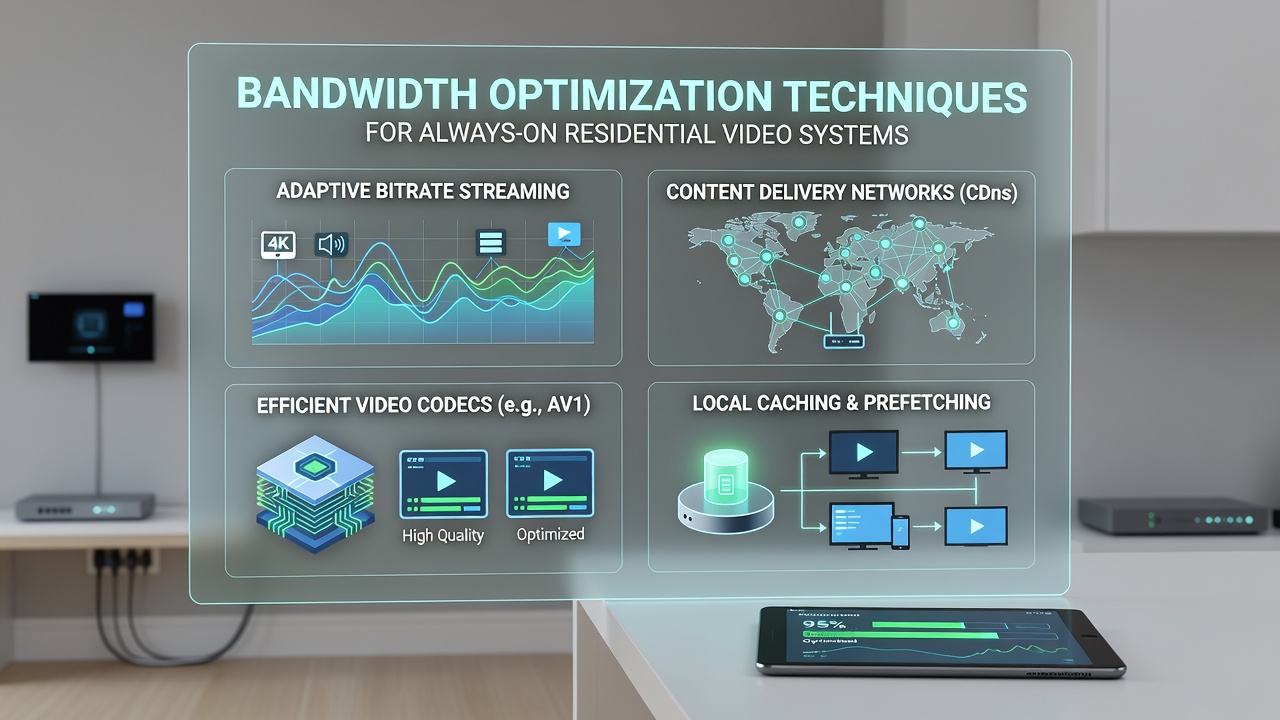
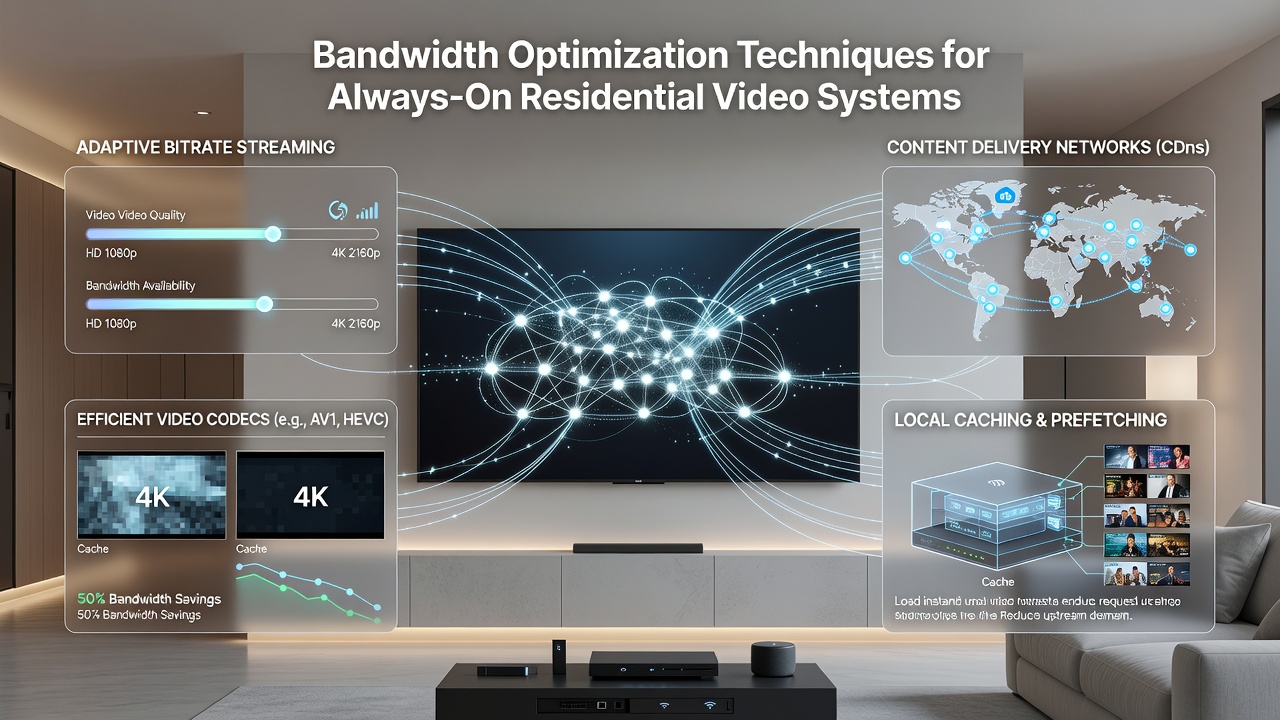
Video compression standards such as H.264 and H.265 form the foundation of most optimization strategies, because they reduce file sizes while preserving enough detail for identification and review. Engineers at equipment manufacturers apply these codecs at the camera level, so the device transmits smaller packets rather than raw footage. Studies published through academic channels show that switching from older MPEG-2 formats to H.265 can cut bandwidth requirements by roughly half without noticeable loss in clarity for security purposes. Systems also incorporate variable bitrate encoding, which lowers quality during static scenes and raises it only when motion occurs, and this approach keeps average consumption lower across a full day.
Adaptive Streaming and Local Processing
Adaptive bitrate streaming adjusts resolution and frame rate in real time based on available bandwidth, and many residential platforms now include this feature as standard. When network congestion appears, the system drops from 1080p to 720p or reduces frames per second until conditions improve. Edge computing adds another layer by performing motion detection and object classification directly on the camera or a local hub, so only relevant clips travel to the cloud. Observers note that this method prevents constant uploading of empty hallways or unchanging backyards, and figures from network monitoring tools confirm substantial drops in daily data transfer when edge analysis runs effectively.
Scheduled recording windows further trim usage by limiting continuous transmission to specific times, while the rest of the day relies on event-triggered captures. In regions with data caps, homeowners configure these windows around peak activity periods such as nighttime, and manufacturers provide scheduling interfaces that integrate with existing smart home routines. As of September 2026, several hardware lines will support updated firmware that aligns recording schedules with new regional broadband policies aimed at evening congestion relief.
Multi-Camera Coordination and Quality Scaling
When several cameras share one connection, central management software coordinates their output so that not every device streams at maximum quality at once. One camera might hold 1080p while others drop to lower resolutions until an alert triggers higher detail on the relevant feed. Research from telecommunications institutes shows this coordinated scaling prevents overload during simultaneous events, and the same studies report that coordinated systems maintain stable connections even on plans rated at 25 megabits per second. Wireless interference also receives attention through channel selection algorithms that shift cameras to less crowded frequencies, which reduces retransmissions and the extra bandwidth those retries consume.
Cloud providers offer tiered storage options that pair with local optimization, and users select lower-resolution cloud uploads while keeping higher-quality versions on local storage for later review. This hybrid model appears in multiple product lines released after 2024, and adoption data reveals steady growth among households seeking to stay within monthly data allowances.
Emerging Standards and Future Adjustments
New encoding profiles under development incorporate machine learning to predict which scenes warrant higher detail, and early tests indicate further reductions in average bitrate. Regulatory bodies in North America and Europe continue to evaluate how these techniques interact with consumer broadband fairness policies, while similar reviews proceed through agencies in Australia and Canada. Equipment vendors release periodic firmware that implements the latest profiles, and installers recommend checking for updates quarterly to maintain efficiency gains.
Conclusion
Bandwidth optimization in always-on residential video systems combines established compression codecs, adaptive streaming, edge processing, and coordinated multi-device management to keep data usage within practical limits. Reports from sources such as the Federal Communications Commission and the Australian Communications and Media Authority document ongoing shifts in household internet patterns that influence how these techniques evolve. As hardware and software continue to integrate newer profiles, residential setups maintain reliable monitoring while aligning with available connection capacities.