Gisela Coleman · 8 September 2026
Decoding Precision Rotation Mechanisms in Residential Monitoring Hardware
Precision rotation mechanisms form the core of many residential monitoring devices where cameras must pan and tilt across wide areas while maintaining stable positioning, and these systems rely on integrated motors along with sensors that track movement in real time. Manufacturers design the hardware to handle continuous operation in home environments where temperature fluctuations and dust accumulation present ongoing challenges, so engineers incorporate sealed bearings and feedback loops that adjust motor output based on load conditions.
Core Technologies Driving Rotation Accuracy
Stepper motors deliver incremental steps that allow exact positioning without constant feedback, whereas servo systems use encoders to correct deviations on the fly and both approaches appear in modern residential units depending on required speed versus precision trade-offs. Data from industry reports shows that hybrid designs combining both motor types now appear more frequently because they balance quick sweeps across a room with fine adjustments when tracking specific points of interest. Researchers at institutions such as the Massachusetts Institute of Technology have documented how microstepping techniques reduce vibration during slow rotations, which improves image stability during video capture.
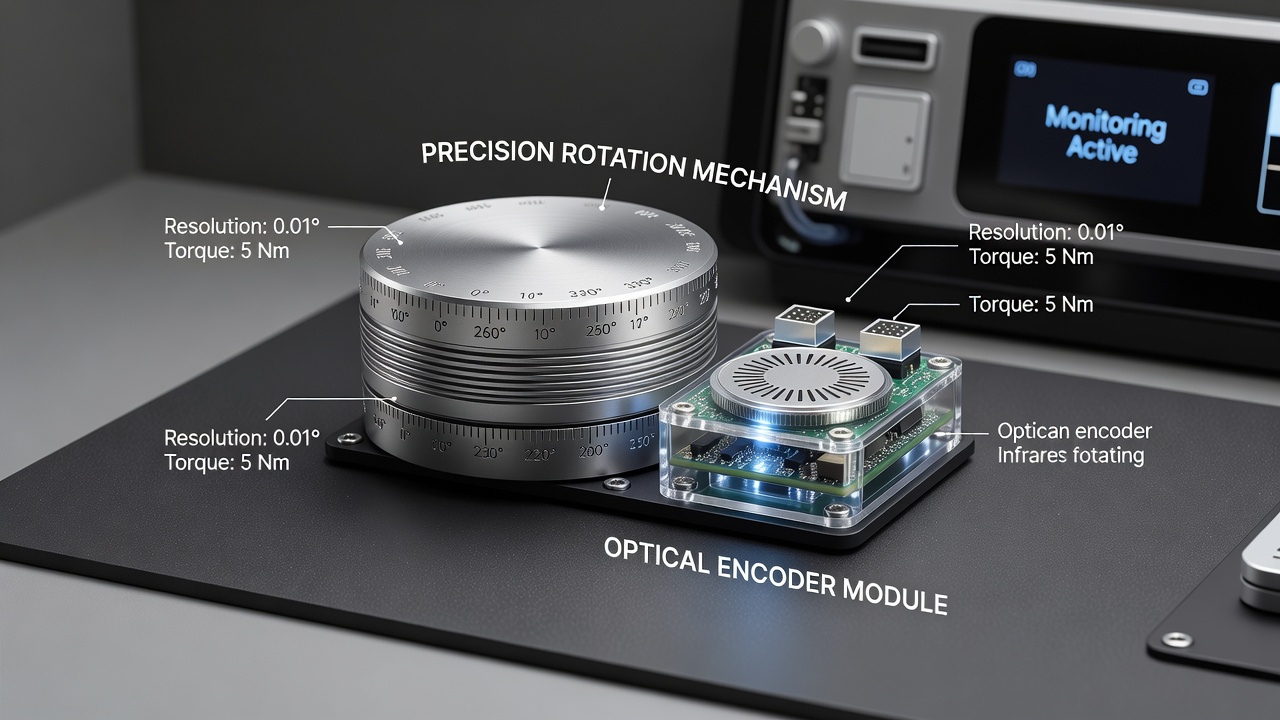
Encoders mounted directly on the output shaft provide positional data that the control board compares against commanded angles, and this closed-loop operation prevents drift that would otherwise accumulate over thousands of movement cycles. Gearing assemblies often use planetary configurations because they distribute torque evenly across multiple contact points, which extends component life in devices that perform frequent repositioning throughout the day.
Integration with Sensor Arrays and Control Systems
Residential monitoring hardware pairs rotation mechanisms with wide-angle lenses and motion detectors so that the system can respond to events by turning toward the detected activity without manual input from users. Firmware algorithms calculate the shortest rotation path while avoiding cable twist limits, and these calculations incorporate limits set during initial calibration at the factory. Observers note that firmware updates released in recent years have refined these path-planning routines, which reduces wear on the drive train during repeated movements between preset positions.
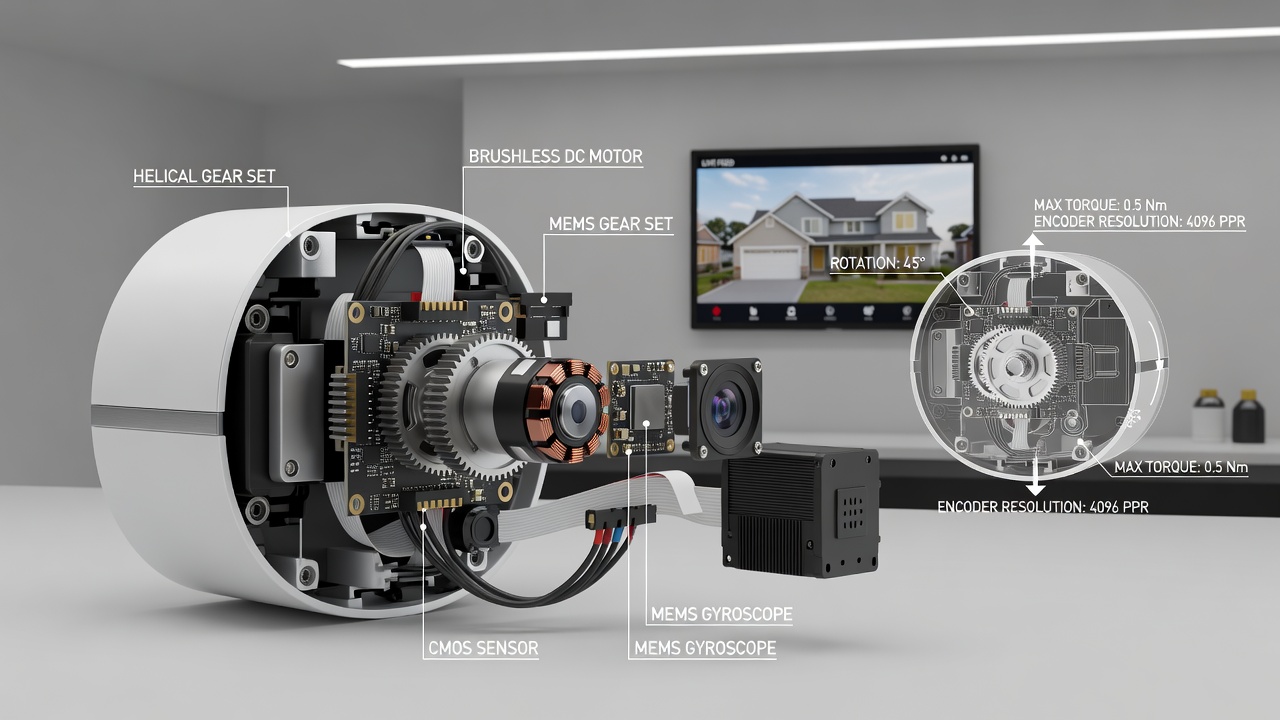
Power delivery to the motors must remain consistent even when the unit operates from battery backup, so designers include voltage regulation circuits that maintain torque output as battery levels drop. Thermal sensors monitor motor temperature during extended operation periods, and the system slows rotation rates automatically when thresholds are exceeded to prevent overheating in enclosed mounting locations.
Calibration Procedures and Long-Term Performance
Initial setup routines guide the mechanism through a series of reference movements that establish zero positions for both pan and tilt axes, after which the device stores these values in non-volatile memory. Homeowners who follow manufacturer guidelines for periodic recalibration maintain higher accuracy over multi-year periods because mechanical settling and minor gear wear can shift reference points slightly. Standards organizations including the National Institute of Standards and Technology publish guidelines on measurement techniques that help verify rotational accuracy in laboratory testing environments before products reach consumers.
Case studies from installation technicians reveal that units exposed to direct sunlight on exterior mounts experience faster lubricant breakdown in the gear assemblies, which leads to increased noise and reduced responsiveness unless maintenance intervals are shortened accordingly. Replacement of drive components follows patterns documented in service manuals, where technicians measure backlash by commanding small angle changes and observing actual movement via the encoder output.
Developments Anticipated by September 2026
Industry roadmaps indicate that new motor controller chips will incorporate machine learning models trained on usage patterns, allowing the hardware to anticipate frequent movement sequences and pre-position components to reduce response time. Wireless synchronization between multiple monitoring units is expected to improve through updated protocols that coordinate simultaneous rotations without network congestion. European Union directives on energy efficiency continue to shape motor selection criteria, pushing manufacturers toward designs that consume less standby power while preserving full rotational capability.
Conclusion
Precision rotation mechanisms in residential monitoring hardware combine mechanical engineering principles with electronic control systems to deliver reliable positioning across varied home installations. Continued refinement of motor technology, encoder feedback, and firmware algorithms supports longer service life and improved responsiveness as these devices become standard features in security setups. Data from regulatory and research sources confirms ongoing progress toward more efficient and accurate systems expected in the coming years.