Casey Brooks · 6 October 2026
Exploring Lens Technology Advancements for Enhanced Low-Light Capture in Compact Home Surveillance Units
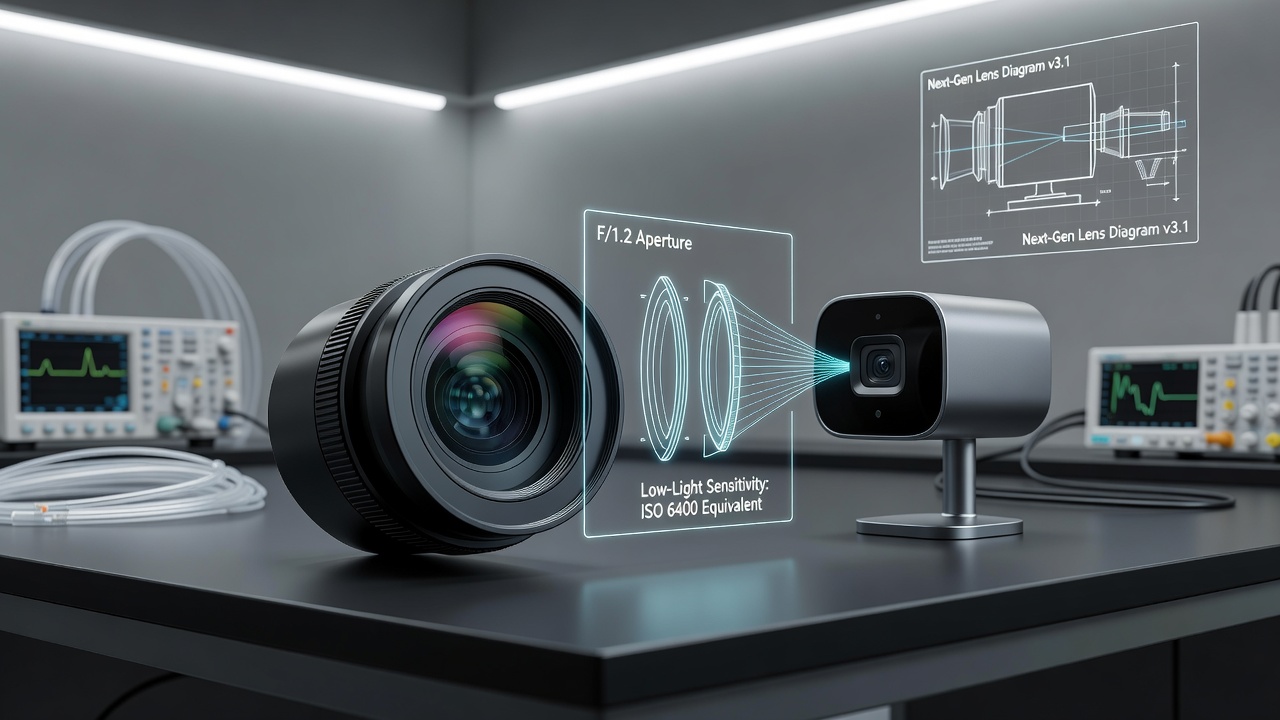
Compact home surveillance units rely on lens technology to gather available light in dim conditions, and recent developments have focused on improving light transmission through refined optical designs. Engineers have incorporated larger apertures alongside precision-ground elements that reduce aberrations while maintaining small form factors suitable for residential installations. These changes allow sensors to receive more photons without increasing overall device size, and manufacturers report measurable gains in image clarity during nighttime hours.
Core Optical Improvements in Modern Lenses
Aspherical lens elements now appear more frequently in compact units because they correct distortions that previously limited performance at wide apertures, and this adjustment helps maintain edge-to-edge sharpness when light levels drop. Anti-reflective coatings applied in multiple layers further minimize flare and ghosting from stray light sources such as streetlamps or porch fixtures. Observers note that these coatings, often derived from vacuum deposition techniques refined over the past decade, contribute to higher contrast ratios in captured footage.
Researchers have examined how fluoride-based glass materials enhance transmission in the near-infrared spectrum, which proves useful for units that combine visible-light capture with supplemental illumination. Data from optical testing facilities indicate that lenses using these materials can achieve up to 15 percent greater throughput compared with earlier soda-lime compositions. Integration of such materials into molded plastic hybrids also keeps production costs manageable while preserving durability against temperature fluctuations common in outdoor residential settings.
Design Adaptations for Space-Constrained Devices
Engineers balance focal length requirements against housing dimensions by employing folded optics paths that redirect light internally, and this approach permits longer effective focal lengths without extending the physical depth of the camera body. Variable aperture mechanisms controlled electronically respond to changing ambient conditions, closing slightly during brighter periods to prevent overexposure while opening fully when illumination falls below set thresholds. Studies conducted by university optics departments show these mechanisms maintain consistent performance across thousands of actuation cycles.
October 2026 saw the release of updated guidelines from the Canadian Standards Association addressing performance benchmarks for low-light imaging components, and these guidelines emphasize standardized testing protocols that evaluate lens efficiency under controlled photon flux levels. Compliance with the new benchmarks has encouraged suppliers to publish detailed modulation transfer function curves that help system integrators compare products across brands.
Complementary Technologies and Performance Metrics
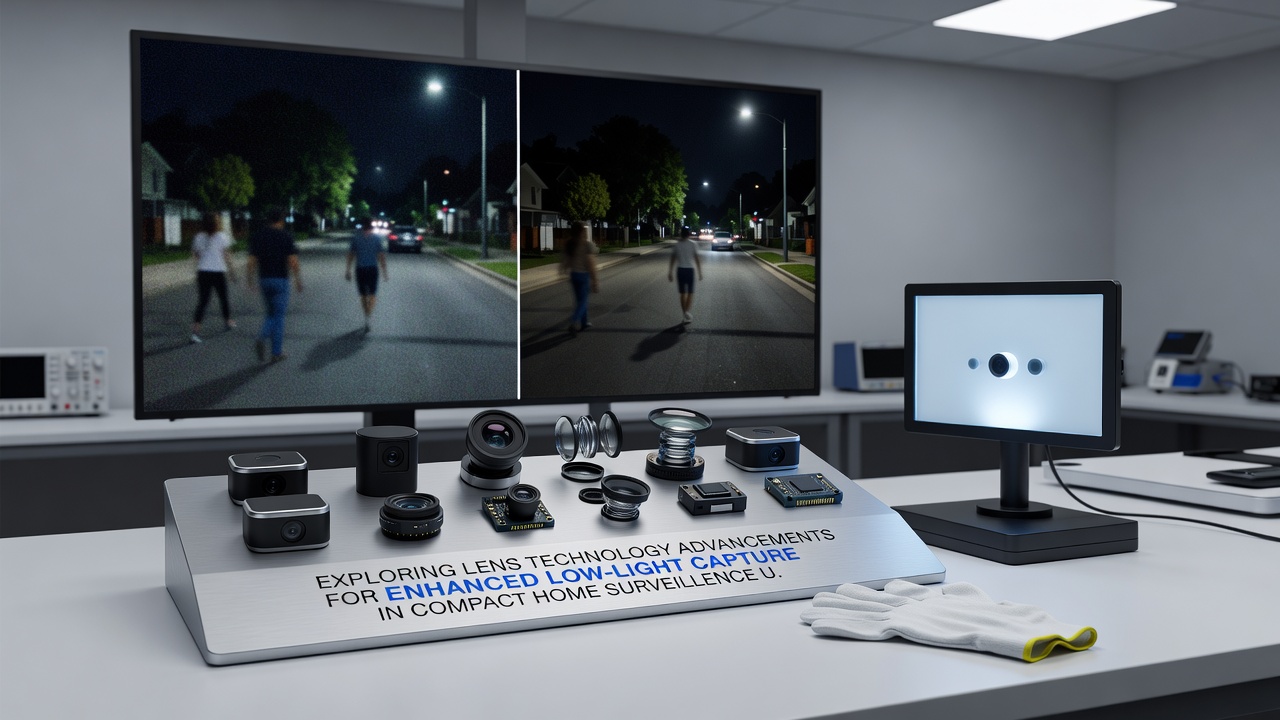
While lens advancements stand at the center of low-light gains, they interact directly with sensor pixel architecture and on-chip noise reduction algorithms. Larger microlenses positioned over each pixel gather light more effectively before it reaches the photodiode, and when paired with high-transmission optics the combined system records usable detail at illumination levels previously considered marginal. Figures from industry test reports reveal average improvements of two stops in equivalent sensitivity across several leading compact models released since 2024.
Those who have evaluated residential installations observe that units equipped with the latest lens iterations deliver clearer facial recognition results at distances up to five meters under quarter-moon conditions. The same evaluations highlight reduced motion blur during brief exposures, which stems from the ability of advanced lenses to concentrate light onto the sensor plane more efficiently. Calibration routines now account for temperature-induced expansion of lens barrels, maintaining focus accuracy across seasonal changes without manual intervention.
Future Directions in Lens Fabrication
Emerging fabrication methods such as precision diamond turning enable production of freeform surfaces that were impractical only a few years earlier, and these surfaces allow designers to correct field curvature in very short optical trains. Academic groups at institutions in the Asia-Pacific region continue to publish findings on nano-structured surfaces that further suppress reflections across broader wavelength ranges. Adoption of these techniques into volume manufacturing remains gradual yet steady, driven by demand for higher-performing yet affordable home monitoring solutions.
Conclusion
Lens technology for compact home surveillance continues to advance through incremental refinements in materials, coatings, and mechanical design. The cumulative effect of these changes appears in measurable improvements to low-light capture, and ongoing standards work such as the Canadian guidelines issued in October 2026 provides a framework for consistent evaluation. Manufacturers and integrators alike track these developments to deliver systems that function reliably across varying residential lighting environments.